
The Collection
Lead designer, print designer, project editor, visual editor
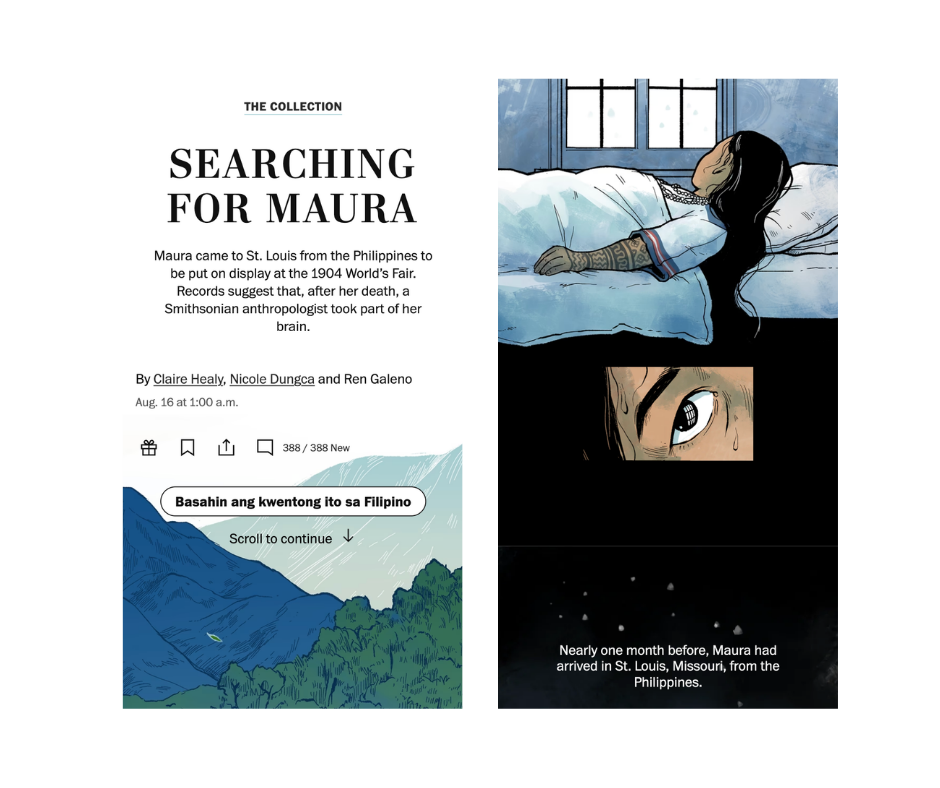
This project had everything: an unbelievable origin story, a dedicated team of more than 40 journalists, an international and a local angle, jaw-dropping findings and creative, innovative storytelling.
In addition to the two investigative stories on the little-known racial brain collection held by the Smithsonian Institute (Washington Post links 1 and 2), we had the story of Maura, a Filipino woman whose remains were kept by the museum after she died at the 1904 World’s Fair. We used historic accounts and archival photography and commissioned an artist living in the Philippines to piece together how she was lured to the U.S. under false pretenses and what happened to her body after she died. The artist reimagined some of the photographs that focused on the people living in fair exhibits and instead drew from their perspective, showing people who came to gawk instead. (Washington Post link, Archive link)
We got all the files for the web presentation of the illustrated story and then as the print designer, I painstakingly cropped and cut them all out to be rearranged in a 48-page tabloid booklet. As one of two project editors on the series, I worked with a translator and Filipino colleagues to have the presentations — online, YouTube and print — available in both English and Tagalog, a first for The Post. (YouTube: English, Tagalog)
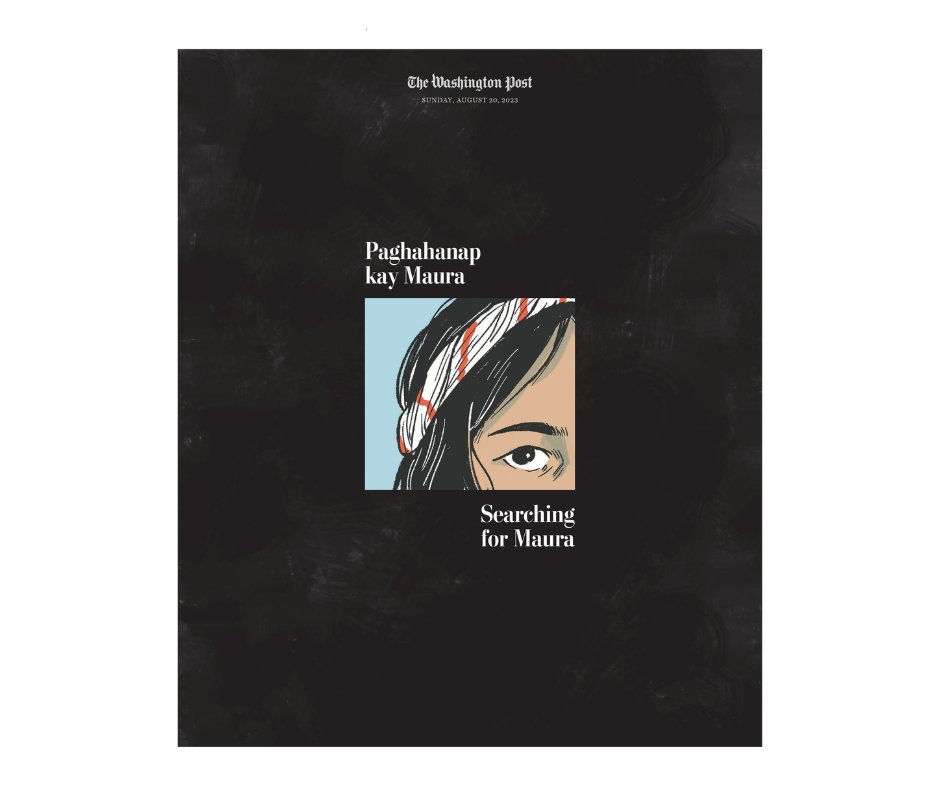
It was the last story I’d lay out for print as a member of the design team, which made it extra special, and to celebrate publishing, I documented a lot of the journey in this Instagram story. I became a visual editor after that and stayed involved in the series to guide the creation of a searchable database of remains still held by the museum.
“Searching for Maura” was a 2024 Pulitzer Prize Finalist in Illustrated Reporting and Commentary.
Youth crime in D.C.
Visual editor, representative editor for the Local desk
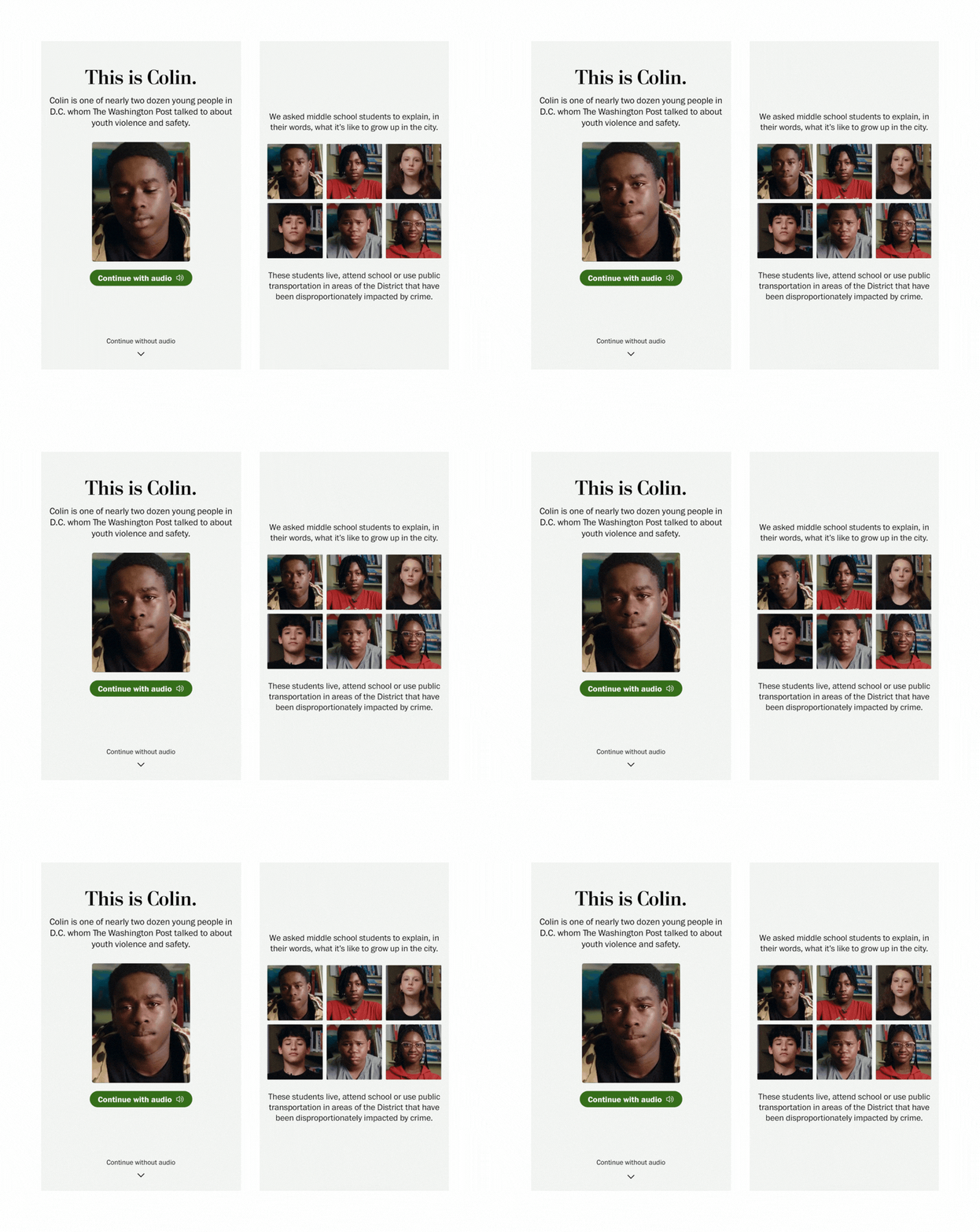
In 2023, D.C.’s crime spiked to a generational high. Notably, a lot of the crime was being committed by people as young as middle schoolers. The Metro and Investigative teams partnered to look more closely at why more people at a younger age were being arrested for violent crimes. The investigation showed the juvenile justice system wasn’t the most effective, and there were issues with truancy, court-mandated GPS monitoring and getting young people through rehabilitative services.
Perhaps unsurprisingly, few teens were willing to have their identities in the investigations. I met with a group of Metro reporters and editors to brainstorm ways we could make this series feel more human. We wanted to be able to show real kids from the city who had seen the ripple effects of the crime wave, so we talked to nearly two dozen middle schoolers, the same age as many who had increasingly been committing crimes, on camera and asked them about crime in the city and whether they felt safe. (Washington Post link, Archive link)
The series was powerful, especially coming out just ahead of the crime emergency. In the future, it can serve as a benchmark for how the city deals with kids committing crimes and the juvenile justice system sees improvement down the line. But witnessing kids struggle to talk about whether the city can do anything to make them feel safe added another level to the findings. This was a story I owned and fought for amid staffing turnover and pressure for the series to run.
The federal takeover of D.C. police
Visuals editor
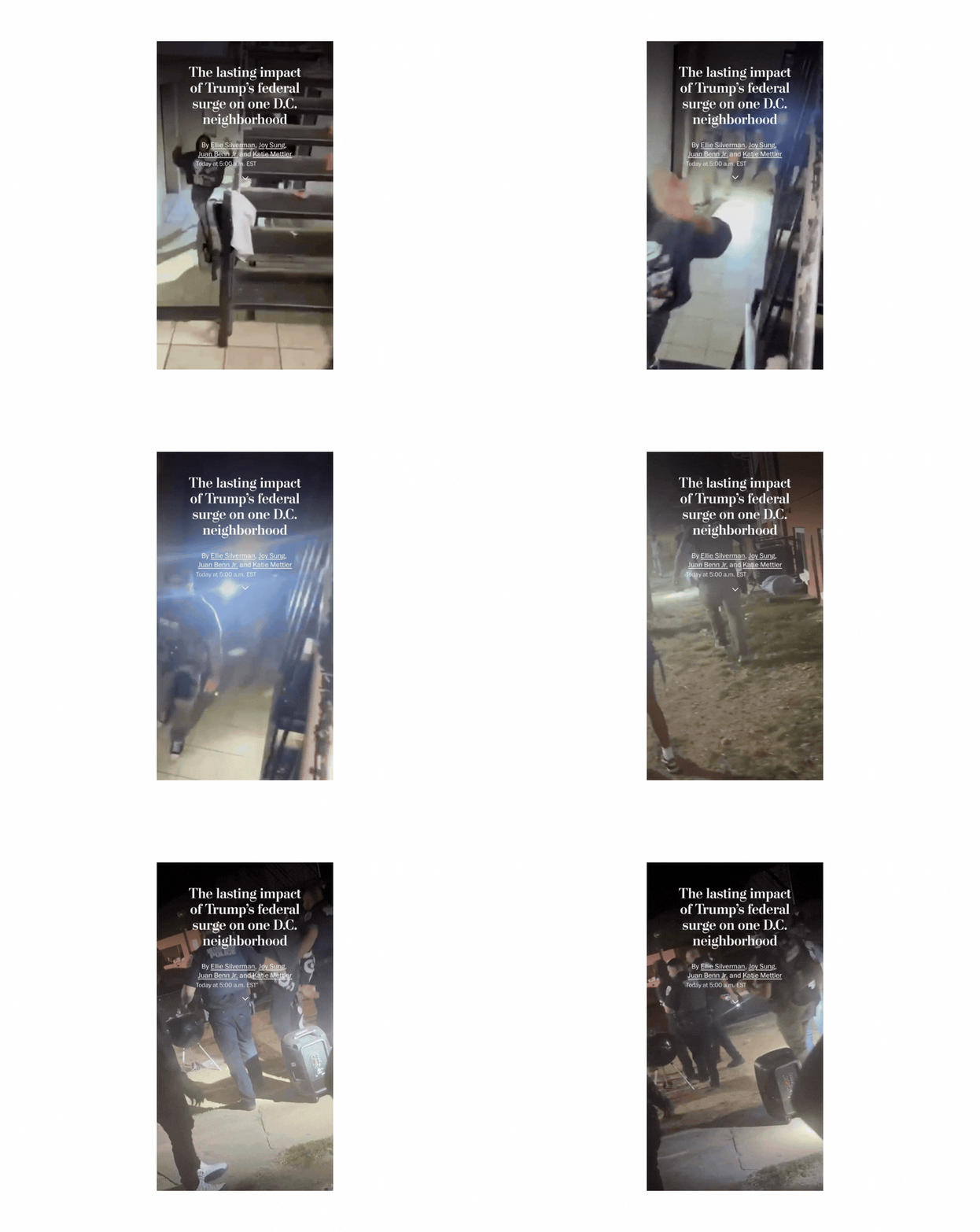
After President Trump declared a “crime emergency” in the nation’s capital, changes were immediate. It was common to see members of the National Guard around the city, but even more, we started seeing videos from bystanders of masked federal agents doing traffic stops and building raids. Metro reporters visited one apartment complex, known as 10th Place, in an area that historically had experienced high crime rates to understand what differences residents and community members were seeing.
We obtained dozens of videos from the people of 10th Place and used them, as well as footage taken by staff, to show interactions with federal agents and several arrests, many of which led to no charges. We used a format created by The Post called a Snap template to weave the footage with an accountability narrative that included arrest data and reaction from the city. For a Snap story, the number of slides with text and visuals should be about a 50-50 split, so after every adjustment, I edited with the reporters to keep things in balance.
Crafting this story was an exercise in choosing every word carefully. Not just because every slide had to have fewer than approximately 100 words, but because there was a lot of nuance to cover. It was important that we represented both the people at the apartment complex and the federal agencies as clearly as possible and provide context for what we were asking our audience to understand. I spent countless hours reading and re-reading different iterations of the draft, shifting video placements, counting slides, and discussing word choices with the reporters and other editors. (Washington Post link, Archive link)